Inaugural Lecture: Dodo Through the Looking Glass

Nidesh Lawtoo;oratie;inaugural speech;Universiteit van Leiden;Leiden;Academiegebouw;Groot Auditorium

Dodo Through the Looking-Glass: A Mirror for Modern and Contemporary Culture. Inaugural Lecture by Prof. dr. Nidesh Lawtoo on the acceptance of his position as Professor Modern/Contemporary European Literature and Culture at Leiden University on Friday, 14 November 2025. Video available here. Text available here

CfP Special Issue of Trópos on Mimetic Studies

In the wake of the ACLA panel on Mimetic Studies we open a CfP for contributions to Trópos: Journal of Hermeneutics and Philosophical Critique, for a special issue titled, “Mimetic Studies: New Theoretical Steps for the Mimetic Turn.” More information is available here.

We look forward to your submissions!

Mimetic Trouble with Judith Butler I

In this last dialogue for HOM Videos, Nidesh Lawtoo meets Judith Butler in Paris to account for the role a different, psychic, performative and troubling conception of mimesis play in their influential work. Taking a genealogical approach to Butler’s latest book to date, Who Is Afraid of Gender, Lawtoo asks Butler to revisit the role mimetic and expressive theories of aesthetic play in their influential book, Gender Trouble (I).

The Urgency of Mimetic Studies: From Imitation to (New) Fascism–Girard Lecture

In this 5th biannual Girard lecture, organized by the Dutch Girard SocietyNidesh Lawtoo steps back to the insights that, as of 2016, lead him to use the term “(new) fascism” as a warning against Donald Trump’s anti-democratic tendencies, which culminated in an insurrection on January 6. Despite many critical warnings and fascist actions, the efficacy of the affective and infective powers of mimesis never ceases to surprise. Hence, the urgency of new mimetic studies. More information HERE.

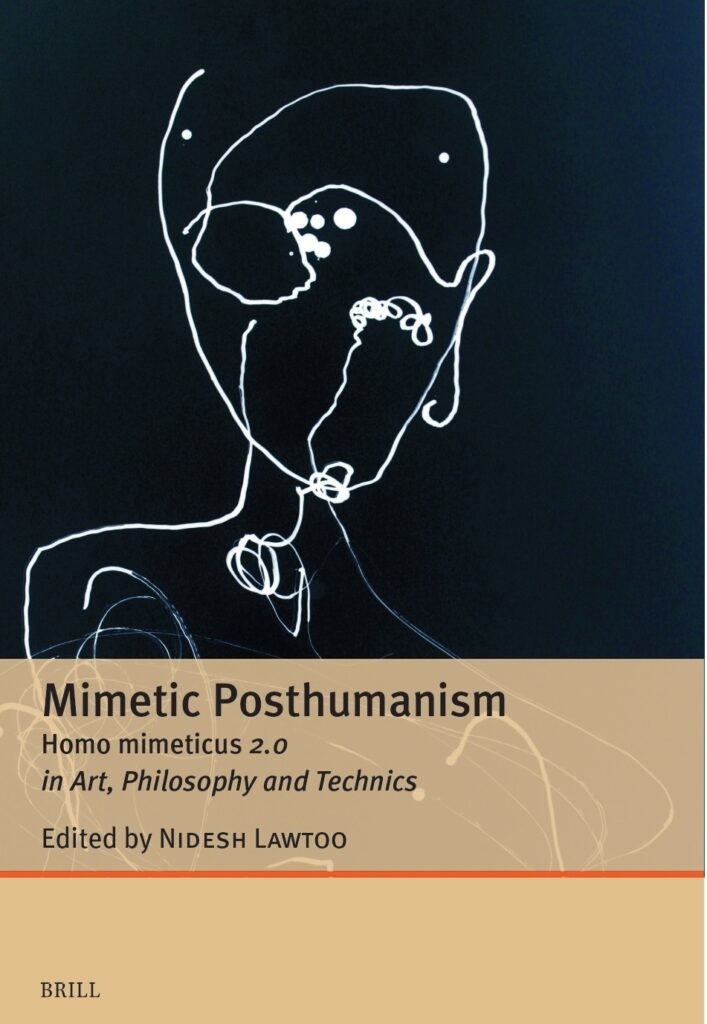
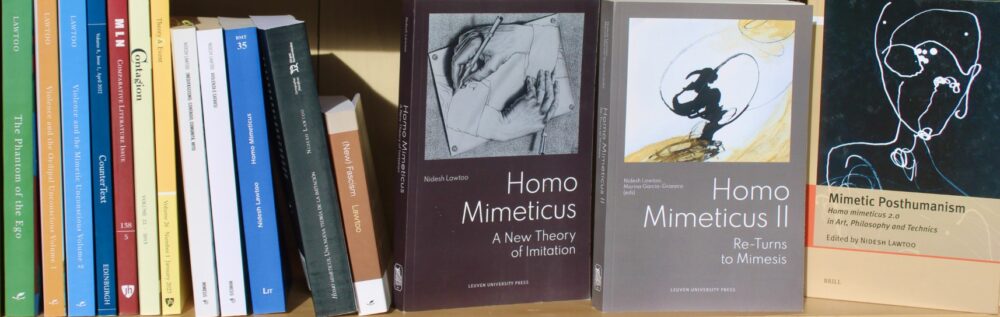
Mimetic Posthumanism: Homo Mimeticus 2.0 in Art, Philosophy and Technics

It is indeed tempting to affirm that on and about November 2022 (post)human character changed. The revolution in A.I. simulations calls for an update of the ancient realization that humans are imitative animals, or homo mimeticus. But mimetic posthumanism is not limited to A.I.: from simulation to identification, affective contagion to viral mimesis, robotics to hypermimesis, a plurality of posthuman theorists–from Katherine Hayles to Francesca Ferrando, Ivan Callus to Patricia Pisters, among others—argue that it is because of our all-too-human tendency to imitate that we are caught in a mimetic process of becoming posthuman in the first place. Free download HERE

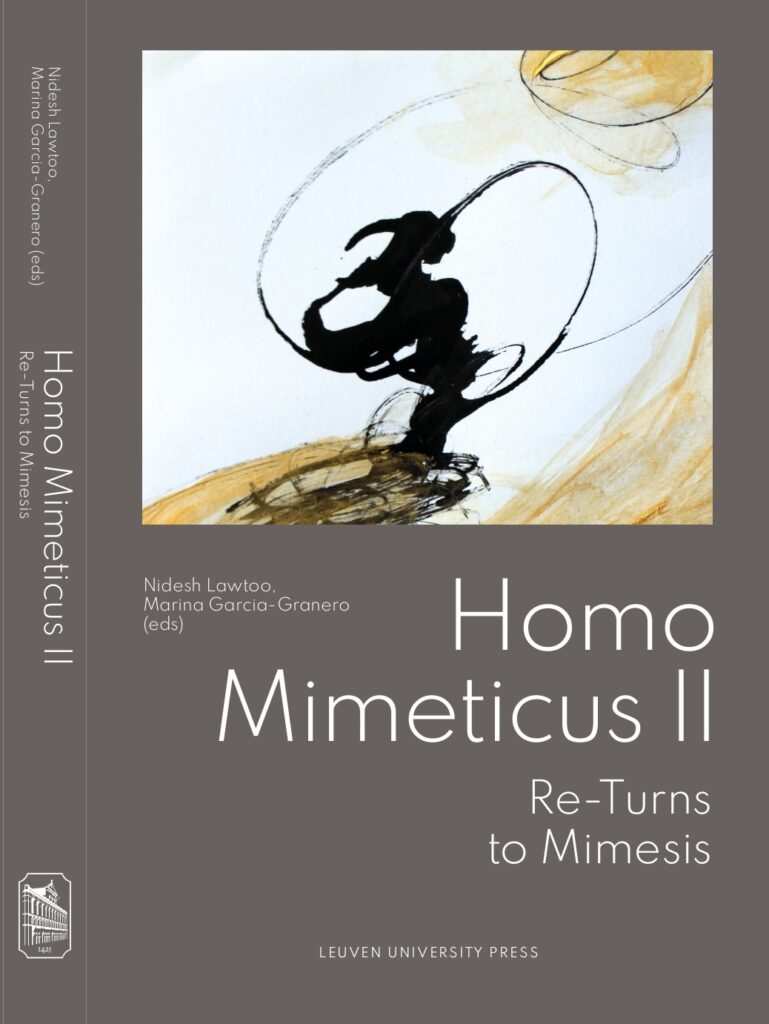
Homo Mimeticus II: Re-Turns to Mimesis

In this second installment of the Homo Mimeticus series (co-edited with Marina Garcia-Granero), international scholars working in philosophy, literary theory, classics, cultural studies, sociology, political theory, and the neurosciences engage creatively with the theory of homo mimeticus to further the transdisciplinary field of mimetic studies. See FREE download & BLOG.

ONLINE BOOK LAUNCH:

)

ACLA 2025 CFP Mimetic Studies: New Theoretical Steps for the Mimetic (Re)Turn

Organizers: Nidesh Lawtoo & Mathijs Peters

The goal of this ACLA panel is to engage productively, critically and creatively with the mimetic (re-)turn to both deepen and further the transdisciplinary field of mimetic studies. We are especially interested in the contemporary conceptual masks of mimesis that enable us to further explore the two “faces” of mimesis that go beyond good and evil: understood as a vibrant affect that destabilizes the boundaries of individuation, mimesis on the one hand generates life-negating pathologies and, on the other hand, produces life-affirmative patho-logies.  More here.